
Carbs power intensity
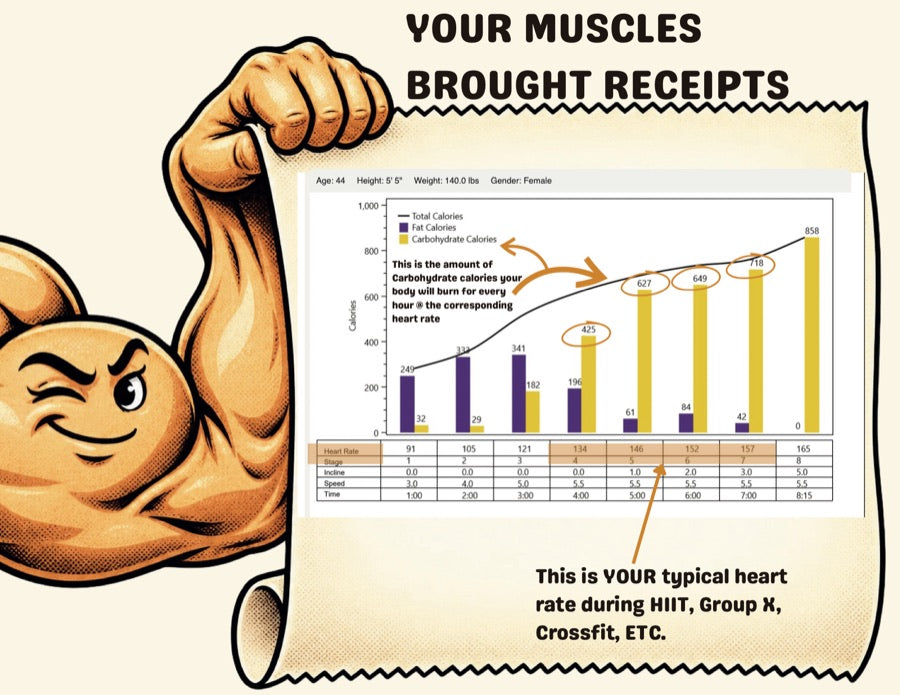
In the workout zone, carbohydrate supplied 83–94% of these athletes' energy.
Real VO2 test results
At an easy pace, your body gets a greater share of its energy from fat. As you push harder, your body will switch to carbohydrates to keep up.
A VO₂ assessment is an exercise test that analyzes your breathing to measure oxygen use and help estimate how your body uses fat and carbs for fuel. These real test results show how that balance changes as the workout gets harder.
83–94% of the energy these athletes burned in the workout zone came from carbs
Tester 1
Male · 39 · 5'9" · 200 lb
1-hour HIIT workout · 151 BPM average
Averaged across the highlighted workout-zone stages.
| Heart rate | Carb cal/hr | Fat cal/hr | From carbs |
|---|---|---|---|
| 83 BPM | 33 | 187 | 15% |
| 97 BPM | 38 | 361 | 10% |
| 122 BPM | 281 | 306 | 48% |
| 135 BPM | 454 | 269 | 63% |
| 145 BPM Workout zone | 679 | 135 | 83% |
| 152 BPM Workout zone | 793 | 77 | 91% |
| 158 BPM Workout zone | 940 | 1 | 100% |
| 164 BPM | 990 | 0 | 100% |
| 167 BPM | 1,001 | 0 | 100% |
Tester 2
Female · 44 · 5'5" · 140 lb
1-hour workout · 144 BPM average
Averaged across the highlighted workout-zone stages.
| Heart rate | Carb cal/hr | Fat cal/hr | From carbs |
|---|---|---|---|
| 91 BPM | 32 | 249 | 11% |
| 105 BPM | 29 | 333 | 8% |
| 121 BPM | 182 | 341 | 35% |
| 134 BPM Workout zone | 425 | 196 | 68% |
| 146 BPM Workout zone | 627 | 61 | 91% |
| 152 BPM Workout zone | 649 | 84 | 89% |
| 157 BPM | 718 | 42 | 94% |
| 165 BPM | 858 | 0 | 100% |
Tester 3
Male · 47 · 5'10" · 150 lb
1-hour workout · 138 BPM average
Averaged across the highlighted workout-zone stages.
| Heart rate | Carb cal/hr | Fat cal/hr | From carbs |
|---|---|---|---|
| 89 BPM | 79 | 223 | 26% |
| 98 BPM | 146 | 299 | 33% |
| 124 BPM Workout zone | 551 | 130 | 81% |
| 141 BPM Workout zone | 796 | 0 | 100% |
| 149 BPM Workout zone | 854 | 0 | 100% |
| 156 BPM | 916 | 0 | 100% |
| 164 BPM | 1,024 | 0 | 100% |
How to read these results. Each result is from a graded treadmill VO2 test that raises speed or incline about once a minute. Values are the test's estimated calories burned per hour at each stage's heart rate. Workout-zone figures average the highlighted stages. Your numbers will depend on fitness, body size and what you've eaten. This is for education, not medical advice.
Easy pace burns fat. Workout pace burns sugar. Fuel the work. Rip. Fuel. Go.
Why it matters
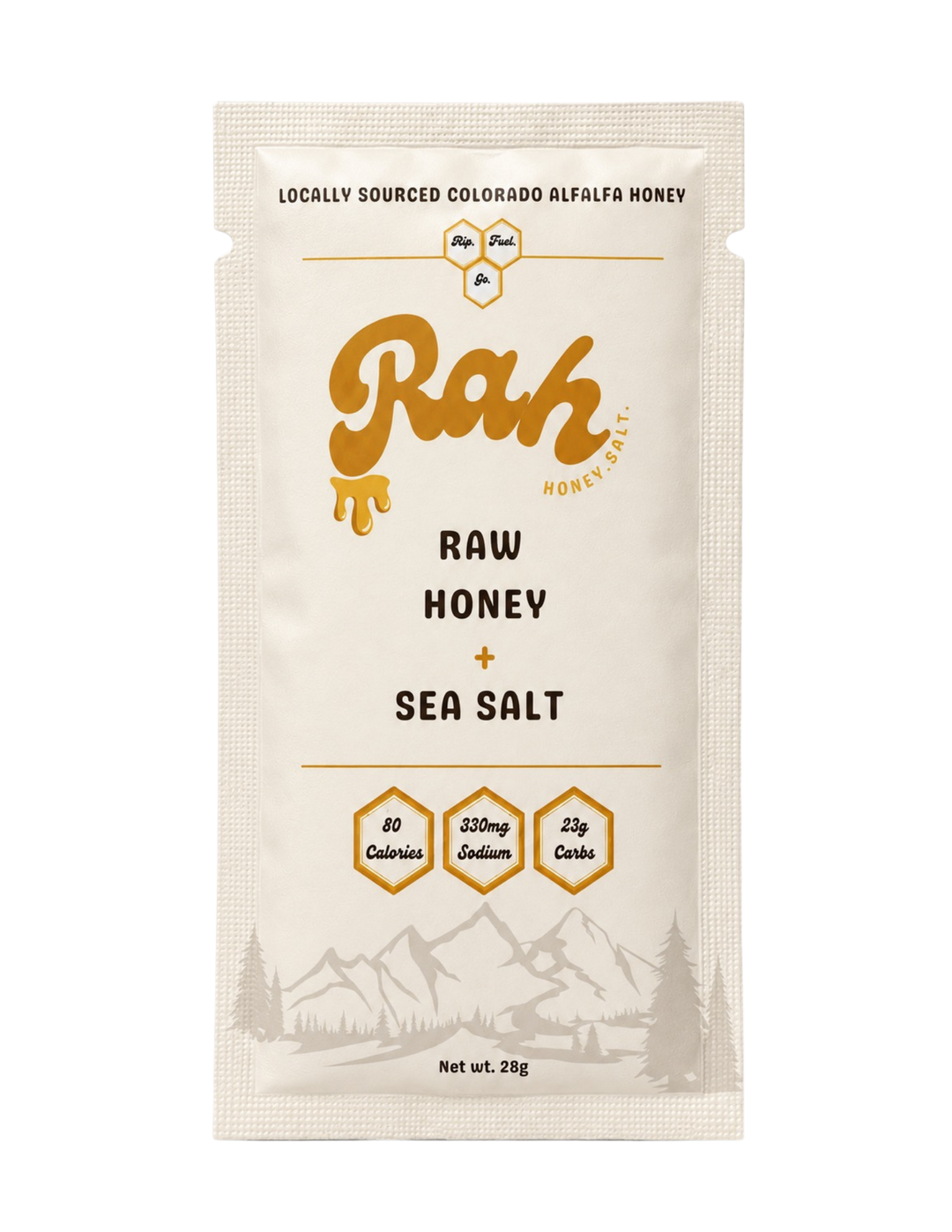
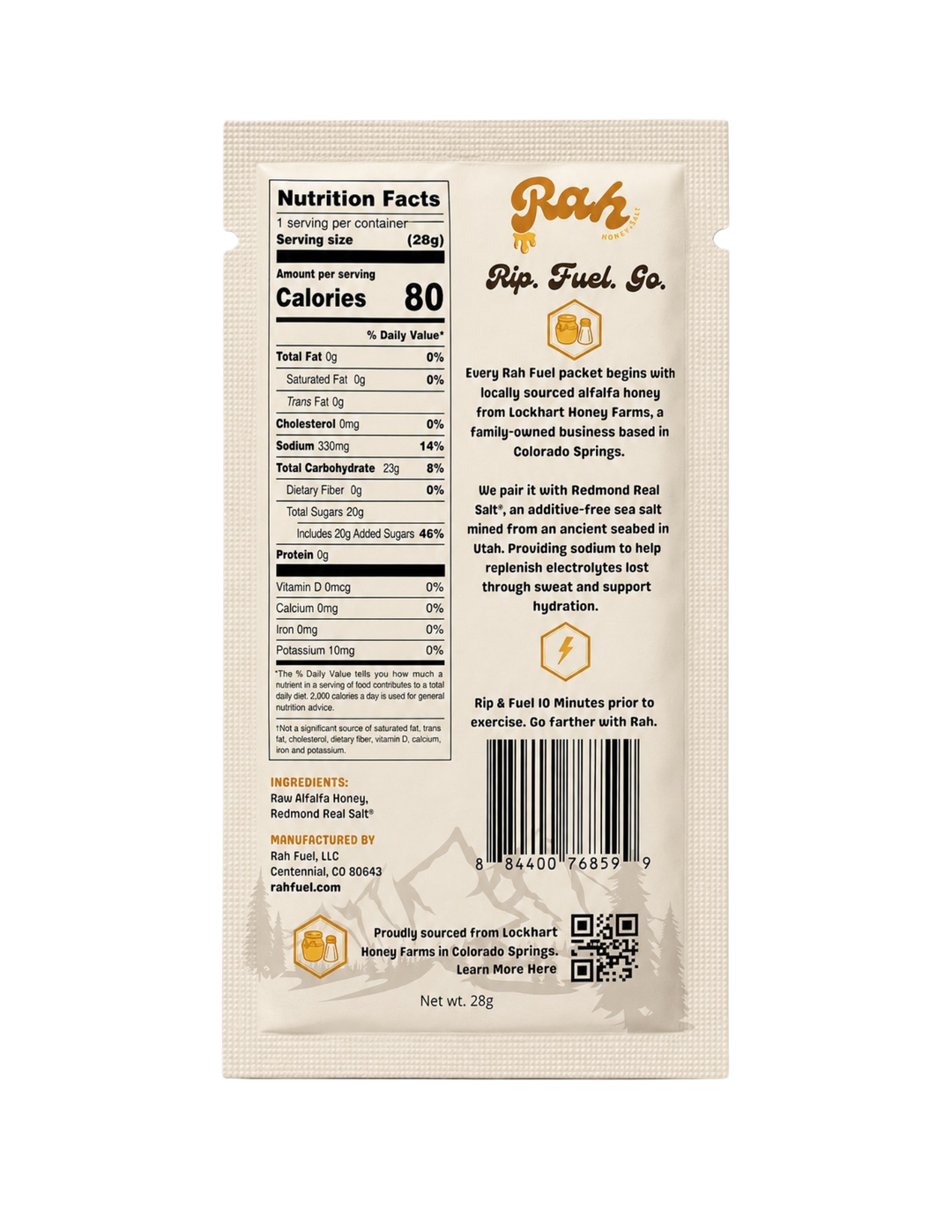
Carbohydrate is your body's fastest fuel, and it's what your muscles reach for as intensity climbs. Your body only stores a limited amount, so topping up before a hard session helps keep the tank from running low. Rah keeps it simple: fast-digesting carbs from raw Colorado honey and sodium from Redmond Real Salt®, nothing else.
In the workout zone, carbohydrate supplied 83–94% of these athletes' energy.
At easy-pace heart rates, fat did most of the work. Both matter; they just show up at different speeds.
Rip a packet about 10 minutes before a hard session: 23g of carbs from raw Colorado honey plus 330mg of sodium.
The sugar matters
Honey is naturally a mix of glucose and fructose, the same pairing sports scientists now build into endurance fuel on purpose.
Estimated from USDA averages for honey. Raw alfalfa honey varies a little by season and bloom.
Glucose alone ~60 g/hr
Glucose + fructose ~90 g/hr
Glucose and fructose are absorbed through separate transporters, so your gut can take in more fuel per hour than from glucose alone.
Honey's sugars are single sugars. There's no extra digestion step before your body can absorb them.
Endurance research has moved toward near-equal glucose and fructose. Honey lands close to 1:1 on its own.
Each packet is 23g of carbs. Take it with a few sips of water, and try new amounts in training before race day.
| Rah honey | Glucose-only fuel | Table sugar | |
|---|---|---|---|
| Sugars | Glucose + fructose | Glucose only | Sucrose (bonded pair) |
| Ways in | 2 pathways | 1 pathway | 2, after splitting |
| Processing | Raw, unfiltered | Refined | Refined |
Sources: USDA FoodData Central, Honey (SR Legacy). Jeukendrup, Sports Med 2014. Rowlands et al., Sports Med 2015. Earnest et al., J Strength Cond Res 2004. Thomas, Erdman & Burke, Med Sci Sports Exerc 2016.
Fuel the high-heart-rate work
Free shipping across ColoradoMade in DenverSecure checkout
